THE
SACRED WHITE
"It stains of mud, sweat, and blood, but never of shame."

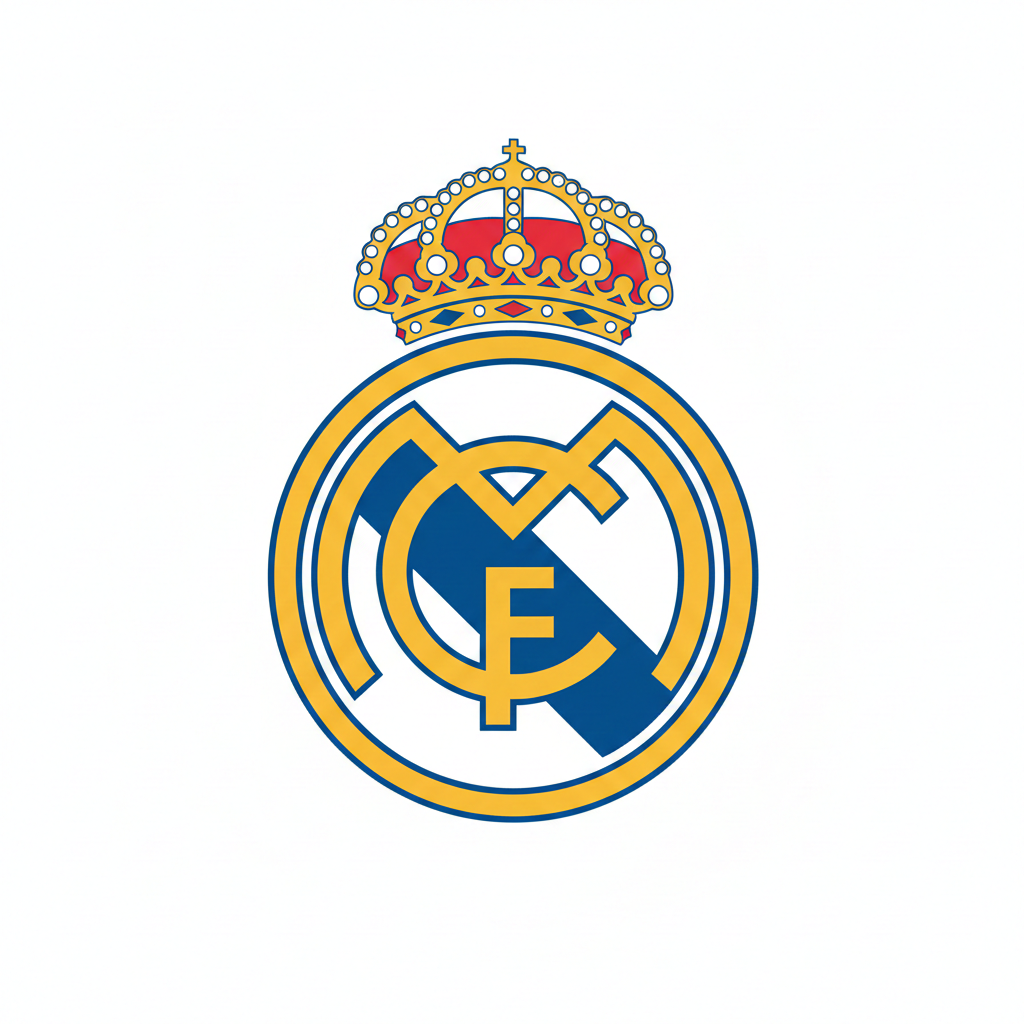
Anatomy of the Crest
The Interlocking "MCF"
The original crest was a simple decorative interweaving of the letters "M", "C", and "F" (Madrid Club de Fútbol) in dark blue on a white shirt. No crown, no circle.
Title of "Real"
King Alfonso XIII granted the club the royal patronage, allowing them to add the Royal Crown to the crest and the word "Real" (Royal) to the name.
The Republic Era
During the Second Spanish Republic, all royal symbols were banned. The crown was removed, and the purple sash of Castile was added diagonally.
Modernization
The crest was modernized for the digital age. The purple sash was officially changed to a darker "Mulberry" blue, though fans still refer to it as "Morada" (Purple).
The Adidas Vault
Partners Since 1998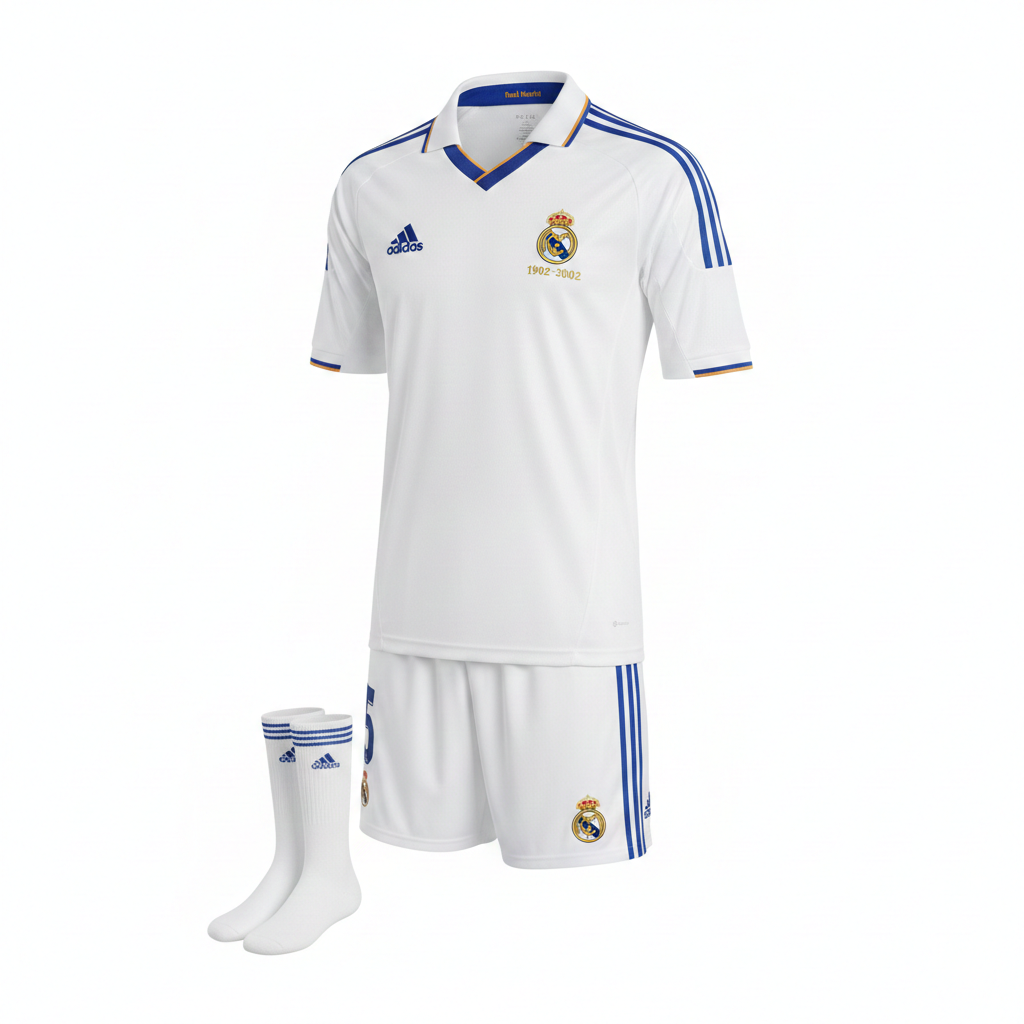
The "Blank" Canvas. No sponsor. Just the crest and the Adidas logo. Worn by Zidane when he scored *that* volley. Pure class.
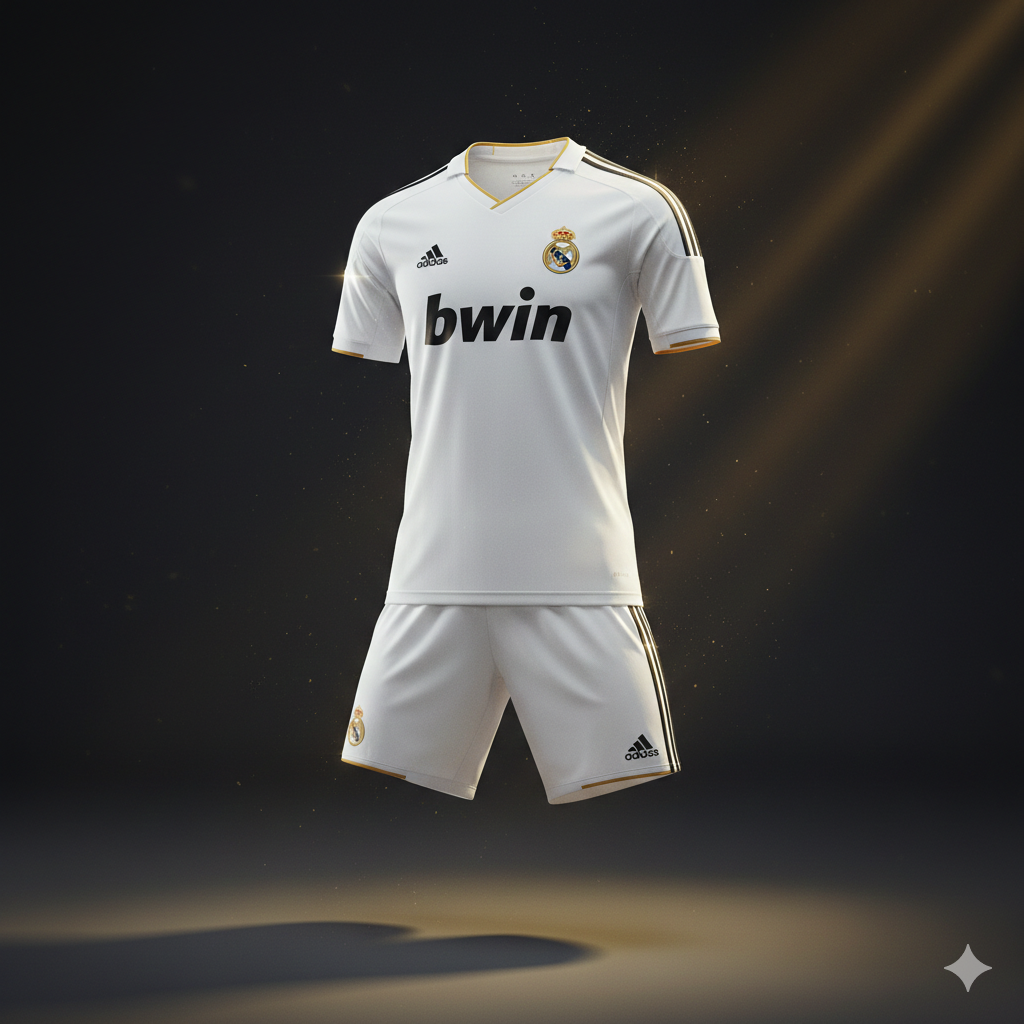
White & Gold. The kit of the "Liga de los Récords" (100 points). Defined by the gold collar and Mourinho's counter-attacking machine.
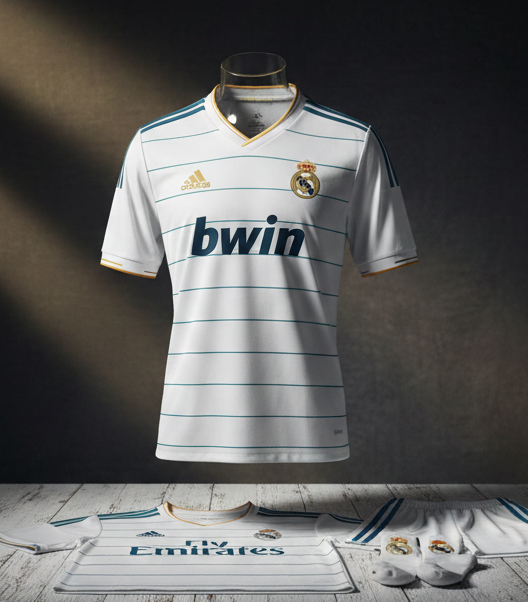
The Dragon. Designed by Japanese fashion legend Yohji Yamamoto (Y-3). Featuring a mythical dragon watermark. A cult classic.
The Billion Euro Shirt
The Real Madrid jersey is the most valuable billboard in sports. In 2019, the club signed an extension with Adidas worth a reported €1.6 Billion over 12 years. This financial firepower allows the club to remain fan-owned (Socios) while competing with state-owned clubs.
Chest Sponsors History
- 1982 - 1985 Zanussi
- 1985 - 1989 Parmalat
- 1992 - 2001 Teka
- 2002 - 2007 Siemens Mobile
- 2007 - 2013 Bwin
- 2013 - Present Fly Emirates
The Bernabéu: A Digital Colosseum
Location & Urban Legend
Located on the Paseo de la Castellana, the Santiago Bernabéu is unique among modern stadiums because it sits in the absolute center of the city's financial district. When it was built in 1947, it was in the outskirts; today, the city has hugged the stadium, creating a vertical cauldron of noise.
The stadium tour (Tour Bernabéu) is the third most-visited museum in Madrid, trailing only the Prado and Reina Sofia. It attracts over 1.5 million visitors annually, showcasing the Hall of Kings where all 15 Champions League trophies are displayed.
The Acoustics of Fear: The stadium's steep vertical stands create a "wall of sound." The roof design traps the noise, amplifying the chants of the "Grada Fans" (the singing section). This phenomenon is known as "Miedo Escénico" (Stage Fright) for opponents.
Renovation Tech Specs
- 360-Degree Halo Board: A video scoreboard running the full perimeter.
- Retractable Roof: Can close fully in 15 minutes to seal the atmosphere.
- The Skywalk: A panoramic terrace offering 360 views of Madrid.
- Steel Skin: The facade is capable of projecting images and light shows.
The "Nuevo Bernabéu" is designed to be the definitive sports venue of the 21st century. It includes luxury VIP boxes, e-sports arenas, and Michelin-star restaurants.
The logistic marvel of the renovation was completing it while the team continued to play matches (aside from the COVID break). It required lifting the 800-ton roof structure using hydraulic jacks—a feat of modern engineering.