History in
White
From a humble plot of land in Madrid to the undisputed Kings of Europe. This is the timeline of the greatest sports institution in history.
Madrid Football Club
On March 6, the Padrós brothers (Juan and Carlos) officially founded the club. In a decision that would define the club's identity forever, they chose all-white kits inspired by the amateur English side Corinthian FC, symbolizing elegance and sportsmanship.
Title of "Real"
King Alfonso XIII granted the club the royal patronage. The club officially changed its name to Real Madrid and added the Royal Crown to the crest.
 The Crown Added
Nuevo Chamartín
Visionary president Santiago Bernabéu inaugurated the new stadium. Critics called it "too big for a small club," but Bernabéu foresaw that ticket sales from a massive capacity (75,000+) would fund the signing of the world's best players.
Alfredo Di Stéfano Arrives
The most important transfer in football history. After a bitter dispute with Barcelona, Di Stéfano signed for Madrid. He completely revolutionized the sport, playing as a defender, midfielder, and attacker simultaneously.
The Five Consecutive Cups
Real Madrid won the first five editions of the newly created European Cup. The streak culminated in the 7-3 victory over Eintracht Frankfurt in Glasgow (1960), widely considered the greatest match ever played.
The Ye-Yé Generation
Led by veteran Paco Gento, a team comprised entirely of Spanish players won the 6th European Cup. They were named after the "Yeah, Yeah, Yeah" chorus of The Beatles' hit "She Loves You," symbolizing the youth culture of the 60s.
La Séptima
After 32 years of wandering the desert, Real Madrid finally regained the throne. Predrag Mijatović's solitary goal against a heavily favored Juventus side ended the curse.
Florentino & The Galácticos
Florentino Pérez wins the presidency by stealing Luís Figo from Barcelona. He implements a strategy of signing the biggest star in the world every summer: Zidane (2001), Ronaldo (2002), Beckham (2003).
La Décima
The obsession. Losing 0-1 to Atlético Madrid in the Lisbon final, Sergio Ramos rose in the 93rd minute to head home the equalizer. Madrid went on to win 4-1 in extra time, securing the elusive 10th title.
The Three-Peat
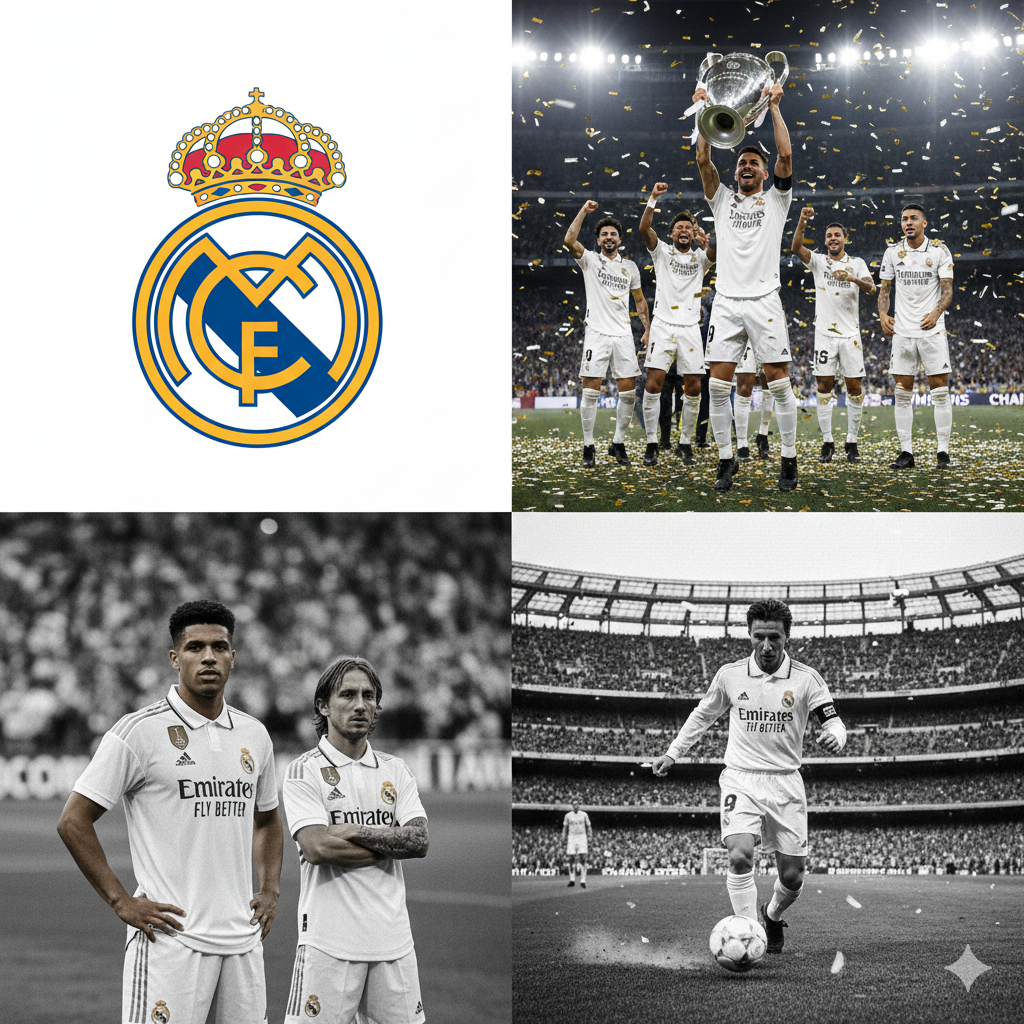
Under Zinedine Zidane, and powered by the goals of Cristiano Ronaldo, Real Madrid achieved the impossible: winning three consecutive Champions League titles (Milan, Cardiff, Kiev).
A Por La 15
A transitional season turned into glory. Without a star striker, Ancelotti's diamond formation and Bellingham's impact led the team to Wembley, where they defeated Dortmund to lift the 15th European Cup.
See the Future SquadLa Fábrica: The Ultimate Talent Factory
More Than Just a Youth Academy
While other academies like La Masia are famous for producing specific tactical players, La Fábrica (The Factory) is famous for producing professional footballers who dominate Europe's top five leagues. Located at Valdebebas (Real Madrid City), it is widely considered the most productive academy in world football.
The philosophy is pragmatic: "Winning is part of development." Players are taught to handle the immense pressure of the white shirt from the U-8 level (Prebenjamín) all the way to Real Madrid Castilla.
The "Sales" Strategy: Real Madrid uses its academy as a massive revenue generator. Players who don't quite make the first team (like Achraf Hakimi, Martin Ødegaard, or Álvaro Morata) are sold for significant fees, often with "buy-back clauses" inserted into their contracts.
Notable Graduates (Active)
- Dani Carvajal: The relentless right-back and multi-UCL winner.
- Nacho Fernández: The ultimate "One Club Man" captain.
- Lucas Vázquez: The versatile winger-turned-defender.
- Fede Valverde: Scouted early for Castilla, now a midfield icon.
- Fran García: Returned after excelling at Rayo Vallecano.
The Real Madrid C team was recently reinstated to bridge the gap between the youth levels and Castilla. This ensures that late bloomers have a place to develop within the system.
Scouting is global. While the core remains Spanish, the club aggressively recruits the best teenage talent from Brazil (Vinicius, Rodrygo, Endrick) and integrates them into the Madrid philosophy immediately. This blend of local grit and international flair is the hallmark of the modern Real Madrid squad.