



The Syrian Collection

Select a visual game below. Test your logic, uncover ancient history, or solve interactive mechanical puzzles from the Cradle of Civilization.

True or False Game
Logic

True or False: Syrian History

Sort the verified historical facts from the enduring myths using our interactive drag-and-drop sorter.

Alchemy Merge Game
Puzzle

Alchemy Merge: Inventions

Combine raw elements like fire, sand, and clay to discover how ancient coastal artisans invented glassblowing.

Pipe Puzzle Game
Mechanics

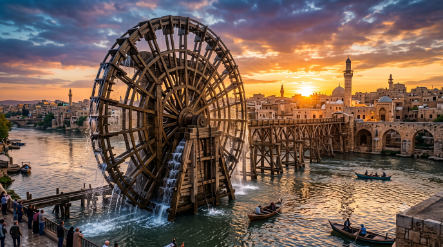
Pipe Puzzle: Route the River

Rotate the giant wooden waterwheels (Norias) and aqueducts to route the Orontes river to the farms.

Logic Grid Game
Logic

Logic Grid: The Silk Road

Read the behavioral clues to figure out which ancient merchant is trading silk, spices, and Aleppo soap.

Spatial Memory Game
Memory

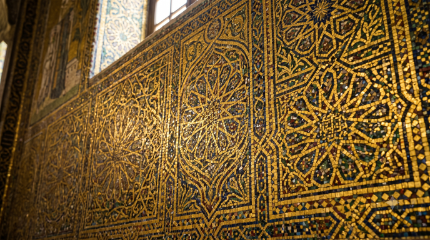
Spatial Memory: Mosaics

Memorize the flawless geometric tile patterns, then quickly rotate the shattered pieces back into place.

Codebreaker Game
Decrypt

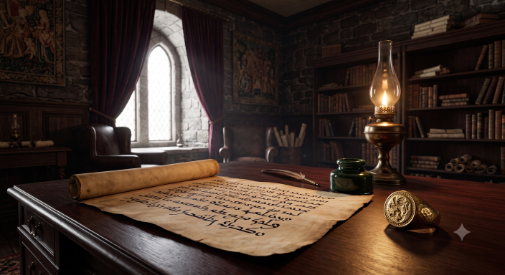
Codebreaker: Ancient Texts

Act as a linguistic archaeologist. Use the legend to decode cuneiform symbols into ancient Levantine proverbs.

Weight Balancing Game
Physics

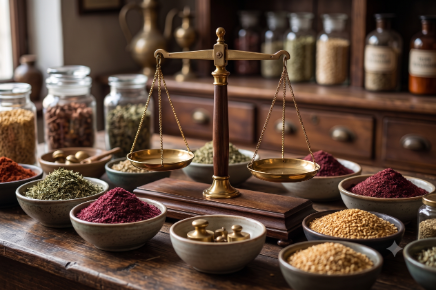
Weight Balancing: Spices

Drag the exact mathematical ratio of heavy and light spices onto the digital scale to create the perfect Za'atar.

Timeline Sorter Game
History

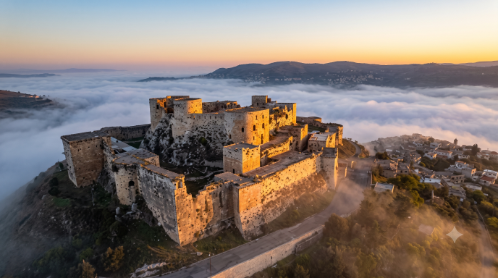
Timeline Sorter: Castles

Drag and drop the region's most famous monolithic citadels and defensive walls into the exact year they were built.

Classic Trivia Game
Trivia

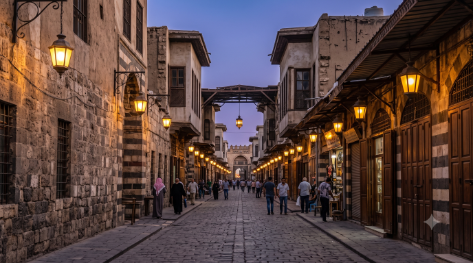
Classic Trivia: Damascus

A rapid-fire, 10-question test covering the oldest continuously inhabited capital city on planet Earth.

Multiple Choice Game
Trivia

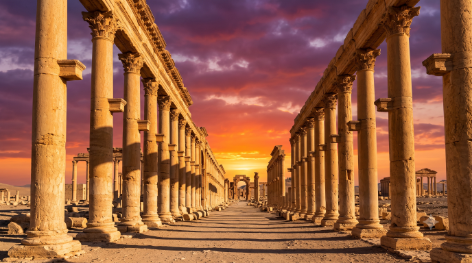
Multiple Choice: Palmyra

How much do you know about Queen Zenobia's rebellion and the ancient empire known as the Bride of the Desert?

Photo Guesser Game
Visual

Photo Guesser: Landscapes

Look at a single photographic frame and identify which Syrian province or geographic landmark it belongs to.

Match Game
Trivia

Match the Quote: Leaders

Connect the famous philosophical quote or architectural achievement to the correct ancient historical figure.

Lore Quiz Game
Lore

Deep Lore: Mythology

Test your knowledge on the Baal Cycle and the ancient Ugaritic deities that ruled the region before monotheism.

Food Trivia Game
Food

Food Trivia: The Kitchen

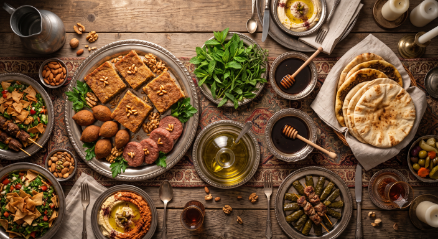
Identify traditional Aleppine dishes, historical preparation methods, and the complex flavor profiles of the region.

Personality Test
Identity Scanner

Personality Test: Which Ancient Archetype Are You?

Answer a series of psychological questions, rapid-fire moral dilemmas, and logic reactions. Our algorithm will evaluate your choices and match you with your historical counterpart: The Silk Road Merchant, The Coastal Artisan, The Damascene Scholar, or The Citadel Commander.

Start Assessment

Historical Archives & Context

The Genesis of the Written Word

Long before the Greeks or Romans established their literary dominance, the coastal city of Ugarit (located in modern-day western Syria) fundamentally altered the trajectory of human communication. Discovered by a peasant in 1928, the ruins of Ugarit yielded massive archives of clay tablets that provided historians with unprecedented insight into Bronze Age administration, religion, and literature. However, the most monumental discovery was not what was written, but *how* it was written.

Prior to this period, writing systems like Egyptian hieroglyphics or Mesopotamian cuneiform were logographic or syllabic. They required scribes to memorize thousands of unique, complex symbols representing entire words or concepts. This made literacy an exclusive, highly restrictive tool of the elite ruling class and specialized clergy. The scribes of Ugarit revolutionized this by inventing the world's first known linear alphabet around 1400 BC.

By distilling the phonetic sounds of their language into a concise system of just thirty cuneiform characters, they created a fully phonetic alphabet. This massive technological leap democratized writing, making it vastly easier to learn, teach, and utilize for daily maritime trade and commerce. The Ugaritic alphabet laid the crucial structural foundation for the subsequent Phoenician alphabet, which in turn directly evolved into the Greek, Latin, and ultimately the modern English alphabet we utilize today.

The Metallurgy of Damascus Steel

Few metallurgical innovations have sparked as much myth, legend, and modern scientific inquiry as Damascus steel. Throughout the Middle Ages, crusaders and European merchants returning from the Levant spoke in awed tones of swords wielded by Islamic warriors that were sharp enough to slice a falling silk scarf in half, yet resilient enough to shatter standard European broadswords upon impact without losing their edge.

The secret to these legendary blades was a combination of highly specialized international trade and localized, masterful forging techniques. The foundational material was not actually mined in the region; it was Wootz steel imported through vast overland trade networks from southern India and Sri Lanka. Wootz steel naturally contained high levels of carbon and trace elements. When this raw material reached the master blacksmiths, they subjected it to a highly guarded, proprietary forging process.

By repeatedly heating, folding, and hammering the steel at precise temperatures, the blacksmiths forced the carbon impurities to align into visible crystalline bands. This grueling process gave the steel its signature "watered" or "shattered" visual pattern on the surface of the blade. Modern electron microscopy has revealed that this ancient forging technique inadvertently created carbon nanotubes within the steel matrix, providing unprecedented structural strength and microscopic serration on the cutting edge.

Engineering the Norias of Hama

The ability to manipulate environmental physics to sustain massive agricultural operations in semi-arid zones is a hallmark of an advanced civilization. In the central western region, the Orontes River cuts a deep gorge through the landscape. While the river provided a reliable, year-round water source, its physical elevation was significantly lower than the fertile agricultural plains situated above the riverbanks. To solve this critical geographical disparity, medieval engineers perfected the construction of the Norias of Hama.

A noria is a massive, incredibly complex hydropowered machine used to lift water into an aqueduct. Unlike modern pumps that rely on external energy sources, the norias were entirely self-sustaining, driven solely by the kinetic energy of the river's current. Ranging from ten to over twenty meters in diameter, these gigantic wooden wheels were constructed primarily from highly durable, water-resistant woods like apricot and mulberry. The outer rim of the wheel was fitted with wooden boxes or clay pots. As the river flowed, the current pushed against wooden paddles attached to the wheel, causing the massive structure to rotate continuously.

As the wheel dipped into the Orontes, the attached boxes submerged and filled with water. The continuous rotation of the wheel lifted these heavy, water-filled boxes to the very top of the cycle. At the apex, the boxes inverted, emptying their contents into a masterfully engineered stone aqueduct system. Gravity then took over, routing the water across miles of elevated channels to irrigate vast fields of cotton, wheat, and fruit orchards, while also supplying the public baths, mosques, and private courtyards of the city.

The acoustic signature of the norias—a deep, rhythmic groaning of wet wood turning on heavy wooden axles—became the iconic soundscape of the region. At their peak, over thirty of these colossal waterwheels operated along the Orontes. They stand today not only as a testament to early mastery of hydrodynamics and renewable mechanical engineering but also as a beautiful synergy between human necessity and the natural environment. They represent an era where infrastructure was built to last for centuries, fundamentally transforming the agricultural yield and economic stability of the entire corridor.