Marvel Cinematic Universe
The MCU isn’t “just films.” It’s a shared language. It’s inside jokes, emotional payoffs, and callback moments that hit harder because you remember the details. This page is built for two types of fans: the ones who want a clean watch order, and the ones who want the deep lore so they can walk into trivia night with unfair confidence.
Use this like a field guide: skim the era map, steal a watch order that matches your mood, learn the terminology, then jump into the Arena. If you’re playing with friends, start a room on Group Hub and run a Marvel round as the “final boss.”
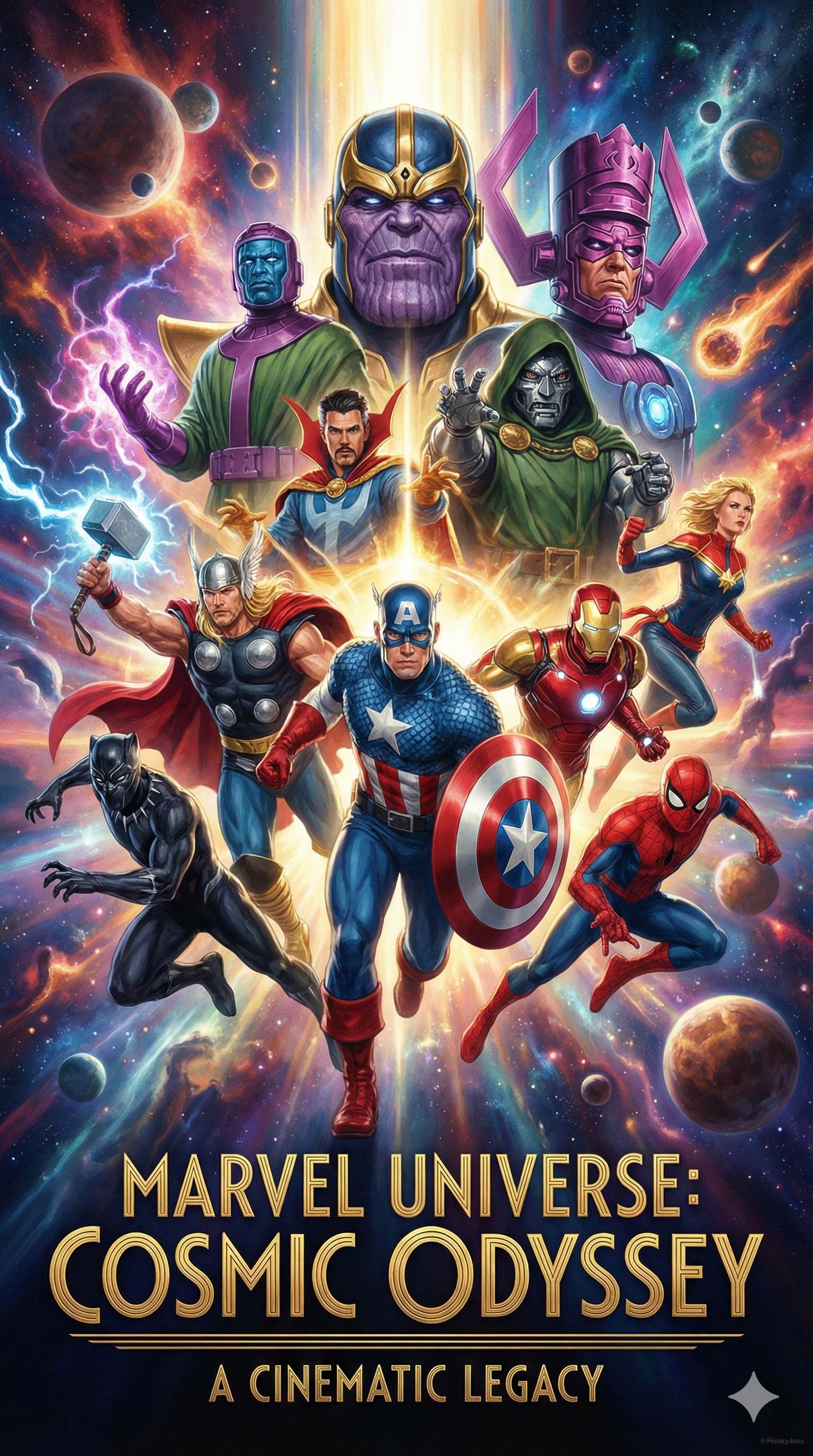
How to Use This MCU Guide
If you’re overwhelmed, you’re normal. The MCU is huge. This page is structured so you can get value in two minutes or two hours: skim the “Eras,” pick a watch order, learn the terms people throw around, then take the quiz while the details are still fresh.
You want the “core story.” Read the era cards, learn the Stones, skim the watch list, then hit Start Quiz.
You want advantage. Learn terms (Blip, Variant, Incursion), then take the quiz twice: once for learning, once for speed.
You want chaos. Open Group Hub, run a Marvel round, then end with a “debate prompt” round.
The Eras
The MCU is easiest to understand as two big movements: a classic rise-and-payoff saga (Infinity), followed by a reality-bending expansion (Multiverse). One is a carefully stacked tower. The other is a maze—fun, messy, occasionally mind-melting.
The Infinity Saga
Phases 1 - 3 (2008-2019)
This is the backbone: a set of origin stories that merge into a single team mythology, then get tested by a villain who isn’t just powerful—he’s inevitable. The emotional core is surprisingly human: sacrifice, accountability, and the cost of being “the one who has to do it.”
- Theme: building trust, then breaking it.
- The hook: “We can’t win on our own.”
- The payoff: a finale that rewards memory.
The Multiverse Saga
Phases 4 - 6 (2021-Present)
After Endgame, the MCU does something risky: it stops pretending the universe is stable. New heroes arrive, old rules crack, and the story becomes about consequences— not just “who can punch harder,” but “what happens when reality itself has a bill to collect?”
- Theme: identity, grief, and ripple effects.
- The hook: timelines don’t forgive.
- The tension: variants, incursions, and power with a price.
MCU Watch Order (Pick Your Style)
People argue about watch order because they’re optimizing for different experiences. Some want clean history. Some want maximum surprise. Here are the three most useful “human” watch orders—choose the one that matches what you want to feel.
| Watch Order | Best For | What You Gain | What You Lose |
|---|---|---|---|
| Release Order | First-time viewers | Maximum reveals + cultural context | Timeline purity |
| Chronological Order | Lore-focused fans | History clarity + cause/effect | Some surprise structure |
| “Infinity Core” (Curated) | Busy humans | Fast path to Endgame payoff | Side stories + flavor |
Go Release Order. The MCU was built to teach you how to watch it. The callbacks land in the intended rhythm.
Go Chronological for history, then do a “best scenes” recap. Your memory will attach to a stronger timeline.
The Infinity Stones (Explained Like a Human)
Think of the Stones as “admin privileges” for reality. Each one controls a fundamental rule. They’re also a storytelling device: they turn personal conflicts into cosmic ones, and cosmic stakes into personal sacrifices.
Most MCU trivia isn’t “what color is the Stone.” It’s the wrapper: the object, the name, the location, and who held it last. If you can recall those four things under pressure, you’re dangerous.
Character Arcs People Actually Remember
The MCU works because it makes god-level conflict feel personal. These arcs are the “memory anchors” that keep fans emotionally invested. If you’re prepping for quizzes, memorize the turning points—not the trivia crumbs.
| Character | Core Wound | Defining Choice | Trivia Anchor |
|---|---|---|---|
| Tony Stark | Control + guilt | Stops running from responsibility | The line that ends a saga |
| Steve Rogers | Time displaced | Chooses a life, not a symbol | Shield legacy moment |
| Thor | Identity without a throne | Learns “worthy” isn’t a hammer | Weapon-forging milestone |
| Wanda Maximoff | Grief + power | Reality becomes temptation | Key term: “Hex / chaos” style lore |
Chronological Watch Order (Preview)
This is a short preview to orient you. If you want the full list, use the Timeline Challenge where the MCU becomes a game instead of homework.
Terminology Database
This is the vocabulary fans use when they argue online. If you can define these cleanly, you can follow any MCU discussion—and you’ll dominate most trivia rounds.
The Blip
The five-year period (2018-2023) where 50% of the universe's population was erased and later returned.
Variant
An alternate version of a person from a different timeline—same “core,” different path.
Vibranium
The strongest metal on Earth, tied to Wakanda, advanced tech, and more than one iconic weapon.
Incursion
A catastrophic collision between universes. In plain terms: the multiverse has consequences.
Post-Credit Scene
A tiny promise of what’s next. For fans, it’s dopamine; for the MCU, it’s a roadmap in disguise.
Team-Up Event
When separate arcs collide into a single narrative. These are the MCU’s “season finales.”
If a friend says a term (like Incursion), respond with: “Definition + example + consequence.” That’s how you turn vocabulary into long-term memory.
Host a Marvel Trivia Night (Without Stress)
The best trivia nights aren’t the ones with the hardest questions. They’re the ones where everyone actually joins, laughs, argues a little, and feels like they “had a moment.” If you want that outcome, use the QuizRealm Group Hub.
Warm-up: recognizable heroes, simple lore.
Stakes: Stones, events, timeline moments.
Hard mode: deep cuts and trick phrasing.
Beat The Clock: High-Stakes Puzzles
In the Quiz Realm Arcade, intelligence is nothing without speed. That’s not motivational talk—this is how group games work in real life. When the timer is running, you don’t need “more knowledge,” you need faster retrieval. Train that skill in Rapid Fire and then bring it back to the MCU quiz: the same mental muscle, just different lore.
If you host a night on Group Hub, opening with a speed round is a cheat code: everyone warms up, laughs, and stops overthinking.
The Deep End: Impossible Trivia
“Hard mode” isn’t about being annoying. It’s about respecting the fans who actually pay attention. If you know the difference between a meme-level answer and a lore-level answer, this is where you belong. The Knowledge Nexus pushes beyond surface facts into the details people only remember after rewatching.
You can use this MCU page as your prep sheet, then jump into the Arena with Marvel quizzes. If you’re playing with friends, run it as a final round on Group Hub for maximum drama.
The Library: Prep for Trivia Night
Some people are naturally “trivia people.” The rest become trivia people by having better resources. The Quiz Realm Library is built like a training ground: you learn just enough structure to feel oriented, then you practice in short sessions. That is how knowledge stops being “information” and becomes “automatic recall.”
When you’re ready to turn study into social energy, host a session on Group Hub. Trivia is more fun when it’s a shared moment, not a solo test.